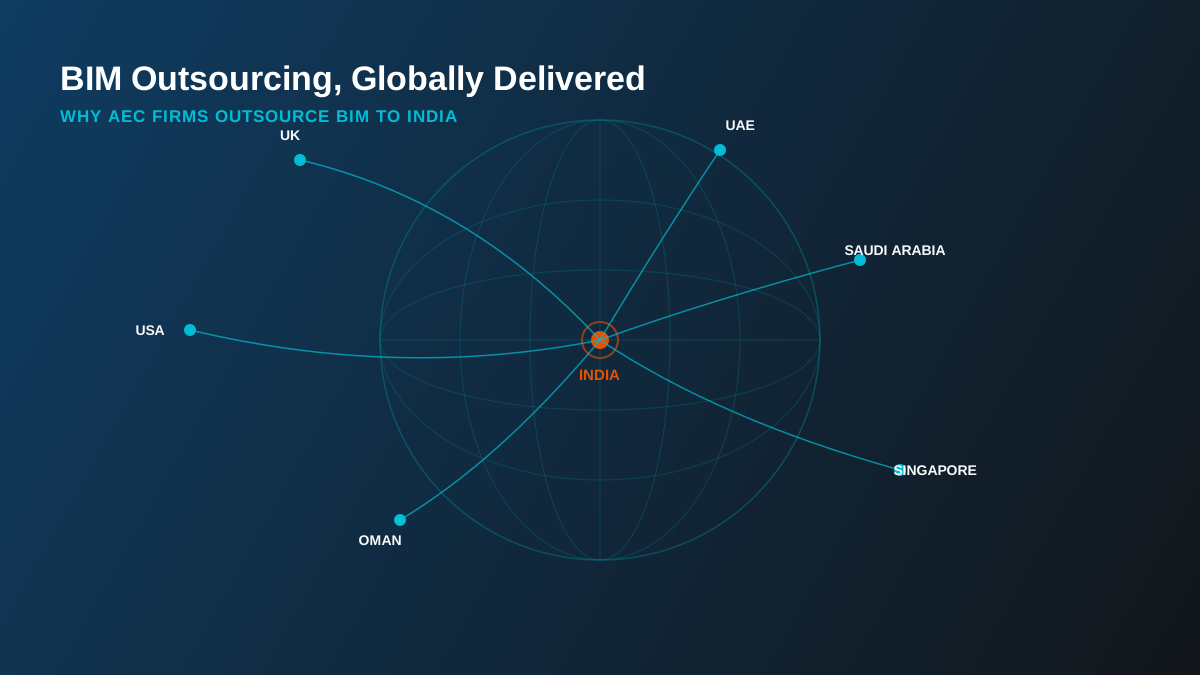
India has become one of the default places architecture, engineering and construction firms go for BIM production work - not as a cost shortcut, but because the combination of technical depth, time-zone coverage, and delivery scale is genuinely hard to match locally. Here's what's actually behind that, beyond the obvious cost line.
Why Firms Outsource BIM at All
BIM production is labour- and time-intensive in a way design decision-making isn't. A firm's in-house architects and engineers are most valuable making design decisions - not spending weeks modeling every wall, duct and rebar cage to a specified LOD. Outsourcing that production work to a dedicated BIM team lets the firm's own staff stay focused on design and client relationships, while a specialist team handles the modeling, coordination, and documentation output.
Cost, Without the Quality Trade-Off
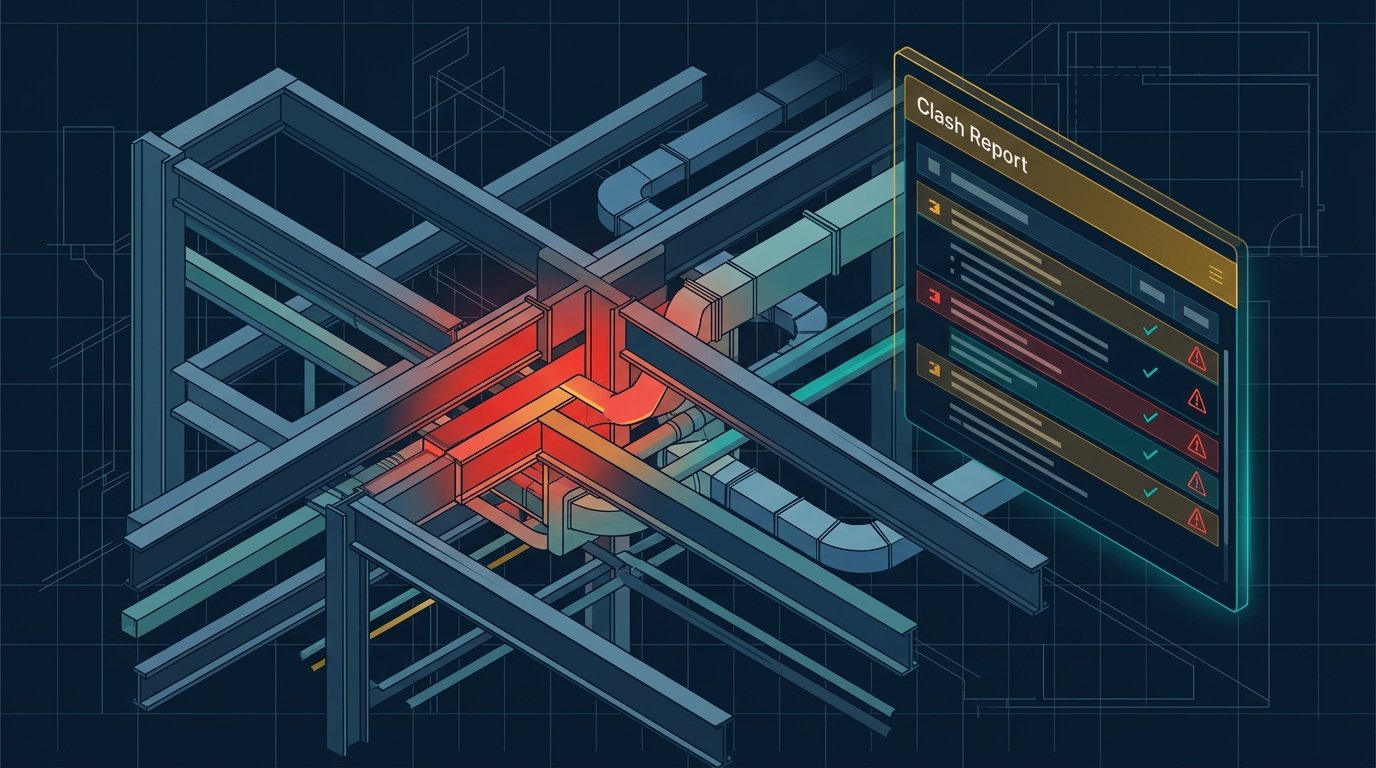
Cost is the reason outsourcing gets a first look, and it's real - production-hour rates in India are meaningfully lower than in the UK, US, or Gulf markets. But cost alone doesn't explain why firms keep coming back for repeat projects rather than treating it as a one-off saving. The firms that stay do so because the quality holds: models delivered to the LOD and standard specified, coordinated and clash-checked before handover, not just cheaper but genuinely usable without a rework cycle on the client's end.
The Time-Zone Advantage
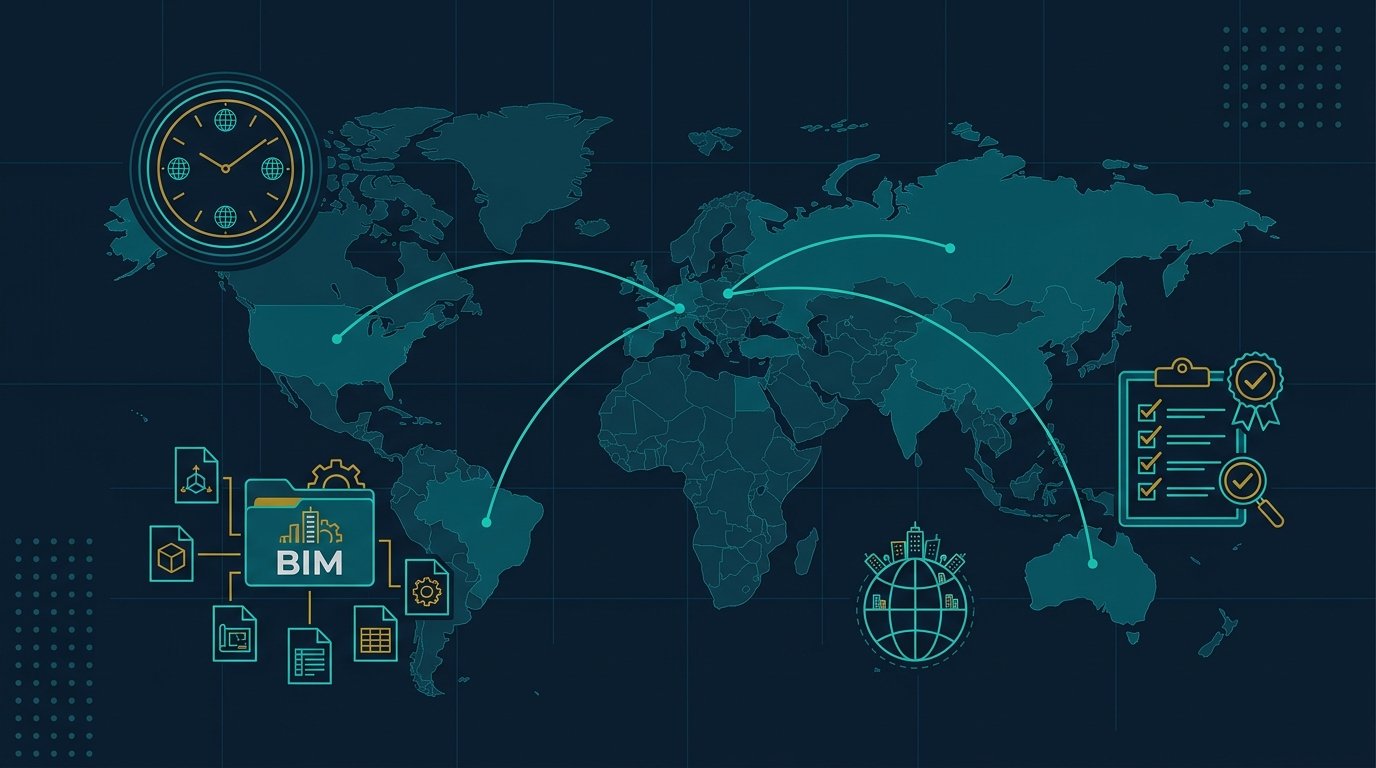
India's time zone sits usefully between the markets that most heavily outsource BIM work - the Gulf, Europe, and the US East Coast. A model handed off at the end of a client's working day can be progressed overnight and be ready for review when their team logs back on. Over a project's full duration, that overlap compounds into real schedule advantage - not because the work happens faster per hour, but because it happens during hours the client's own team isn't paying for.
Depth Across Every Discipline
The other underrated factor is sheer volume of specialized experience. A BIM consultancy running dozens of concurrent projects across architectural, structural, MEP, and fire protection scopes sees a far wider range of building types and coordination problems than any single firm's in-house team does on its own projects alone. That range shows up as fewer surprises in coordination - a team that's modeled hospitals, data centers, metro stations and high-rise towers has already seen most of what a new project will throw at it.
Across our own project history, that's meant delivering BIM for commercial towers and IT campuses in India, hospitality and residential projects across the UAE, Oman and Saudi Arabia, education and laboratory buildings in Dubai and Puerto Rico, metro stations, data centers, and industrial and oil & gas facilities spanning the UK, Ukraine, and Saudi Arabia - across 10+ countries in total.
What that range actually buys a client: a team that isn't encountering a hospital's infection-control clearances, a data center's structural load path, or a metro station's clash-dense MEP for the first time on their project.
What an Outsourced Engagement Looks Like
In practice, an outsourced BIM engagement isn't a black box handoff - it runs on the same BIM Execution Plan, LOD agreements, and coordination cadence as an in-house team would use, just delivered by a remote specialist team. Scope is agreed per discipline and LOD, models are reviewed on a set cycle rather than delivered cold at the end, and standards (IS, BS 8110, ACI 318, Eurocode, ISO 19650) are matched to whatever the project - and its jurisdiction - requires.
We work as an extension of consultant, contractor, and owner teams across the full range of BIM services, not just production capacity. If you're evaluating an outsourced BIM partner for an upcoming project, get a free quote and we'll scope it against your actual project requirements.