Outsourcing BIM (Building Information Modeling) services has become standard practice for architecture, engineering, and construction (AEC) firms worldwide. It cuts costs, extends production capacity, and gives access to specialized BIM skill sets that may not exist in-house. But working with an outsourced BIM company across borders introduces challenges that do not come up when hiring locally. This guide covers what to know before choosing a BIM outsourcing partner — and the questions that separate a reliable one from a risky one.
Why Time Zones Are an Asset, Not Just an Obstacle
The instinct with offshore BIM services is to treat time zone differences as a problem to manage around. In reality, a well-run BIM outsourcing partnership turns the time gap into a production advantage.
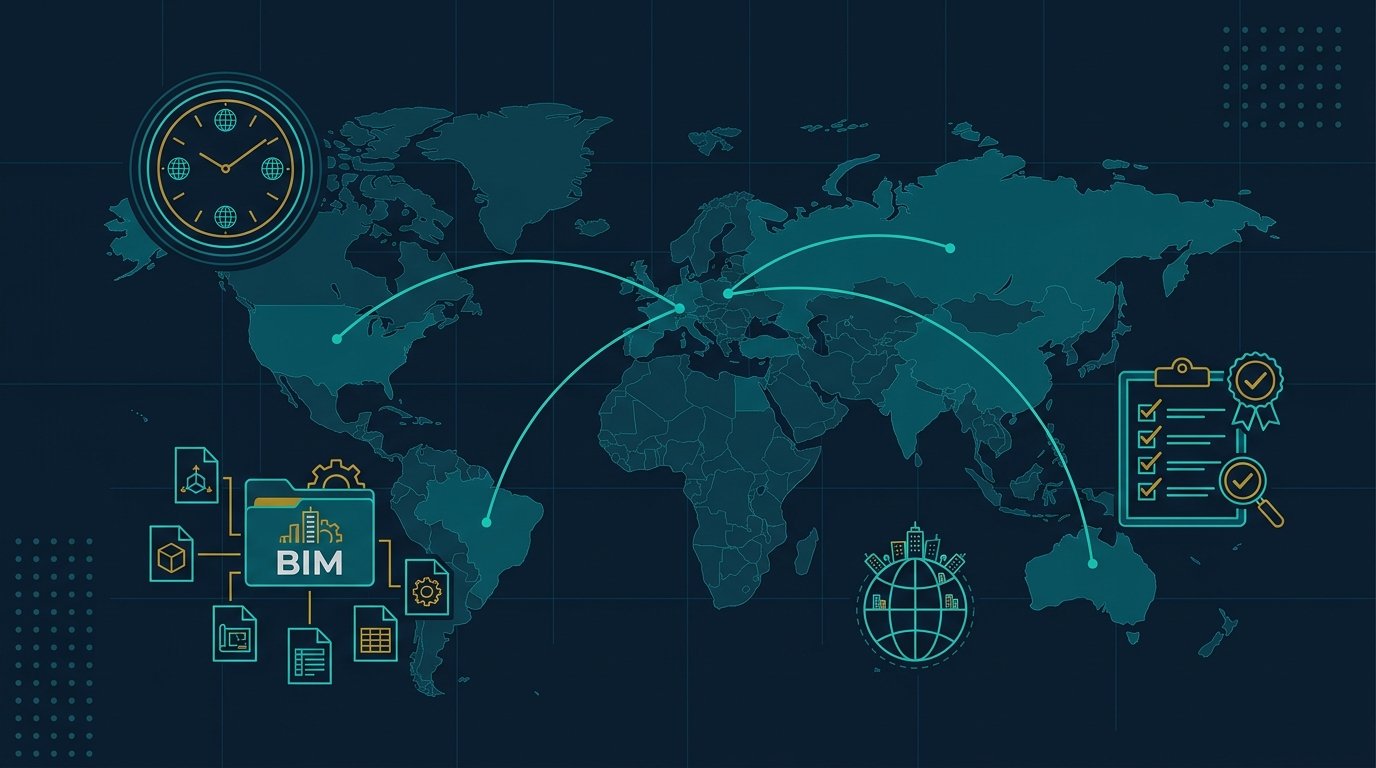
When your outsourced BIM team works while your in-house team sleeps, you get a "follow-the-sun" workflow — models get updated overnight, and your team walks in each morning to reviewed, progressed work rather than a blank slate. This can meaningfully compress project timelines, especially on fast-track jobs with tight design-to-documentation deadlines.
The key is structure, not coincidence. Look for a BIM outsourcing company that provides:
- A clear daily handoff report (what was completed, what is pending, what needs client input)
- At least a few hours of overlapping working hours for live coordination calls
- Strong async communication — recorded walkthroughs, markup screenshots, written notes — rather than relying purely on real-time meetings
Tip: If overlap is minimal, ask how urgent clarifications are handled. A documented escalation process — not just "email us" — signals a partner who has solved this before.
How to Set Up a BIM File Handoff Protocol
This is where most BIM outsourcing relationships break down in practice. A shared drive full of Revit files is not a handoff system — it is a recipe for version conflicts, broken links, and rework.
Before starting, clarify the following with any BIM partner:
Naming and folder conventions
Ask whether they follow, or can adapt to, an international standard like ISO 19650 for file naming, folder structure, and status codes (S0, S1, S2, etc.).
Software versions and worksharing
Confirm you are both on the same software version, and ask how they manage worksharing — central file management, cloud worksharing (BIM 360, Autodesk Construction Cloud, Trimble Connect), or another model-sharing strategy.
Native files vs. federated models
Clarify whether you will receive native, editable files or only federated/linked models for coordination.
Backup and version control
A serious BIM outsourcing partner has internal version control discipline — daily backups, model rollback capability, and a clear audit trail of who changed what and when.
A strong partner proposes this structure to you, rather than waiting to be asked. That is often the clearest early signal of how the engagement will run.
What Real BIM Quality Control Looks Like
The biggest risk in outsourced BIM services is not bad modeling — it is inconsistent modeling that only surfaces during coordination, once it is expensive to fix.
Ask any prospective BIM partner to walk you through their BIM quality control process specifically, not just their general capabilities. A mature process typically includes:
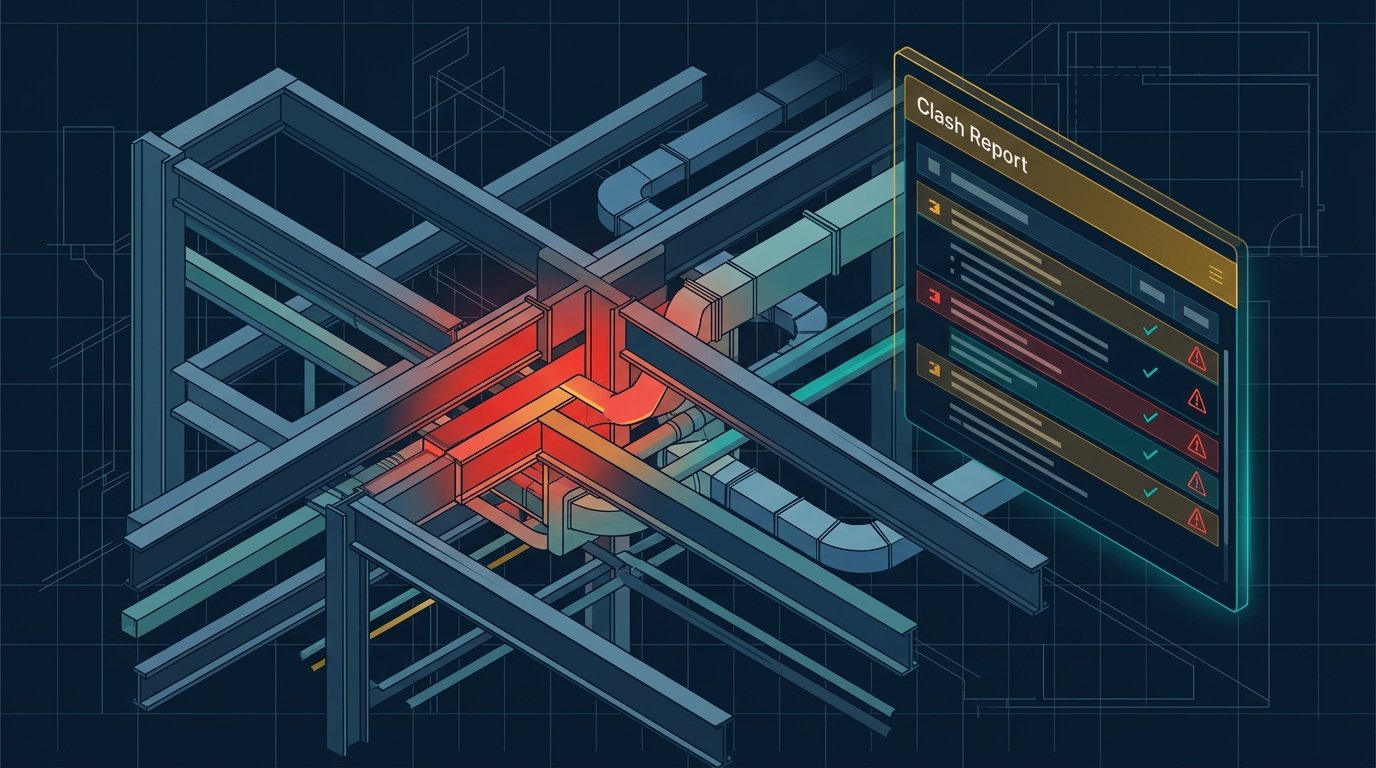
- Internal clash detection before models are sent to you
- Standards compliance checks against your BIM Execution Plan (BEP)
- A defined Level of Development (LOD) target for each deliverable stage, agreed on in writing
- Model audits using tools like Navisworks, Solibri, or BIM 360 model checking, with logged issues and resolutions
- A single point of contact — usually a BIM manager — who owns quality on their end
It is also worth asking how they handle rework. Firms that get defensive about revision requests are a red flag. Firms that treat markup rounds as routine — and can show a sample issue-tracking log from a past project — are usually the ones who deliver consistently.
Why You Need a BIM Execution Plan (BEP)
Everything above — time zone workflow, file handoff protocol, and QC checkpoints — should be documented in a shared BIM Execution Plan (BEP) before work begins, not figured out as you go.
A BEP that spells out responsibilities, LOD by stage, software and naming standards, and review cadence removes most of the ambiguity that causes outsourcing relationships to underperform. Any credible BIM outsourcing company will either have a BEP template they work from, or will expect you to provide one — both are fine. What is not fine is starting without one.
ISO 19650 is the internationally recognised standard for managing information over the whole lifecycle of a built asset using BIM. If your BIM partner references this standard fluently, that is a strong quality signal.
FAQ: Outsourcing BIM Services
What does it mean to outsource BIM services?
Outsourcing BIM services means hiring an external company or team to handle Building Information Modeling tasks — such as 3D modeling, clash detection, or documentation — instead of, or alongside, an in-house team.
Is outsourcing BIM services cost-effective?
Yes, for most firms. Outsourcing typically reduces overhead (software licenses, training, salaries) while providing scalable capacity for projects with variable workloads.
What standard should a BIM outsourcing partner follow?
ISO 19650 is the internationally recognised standard for managing information over the whole lifecycle of a built asset using BIM, and it is a strong benchmark to look for.
How do I manage communication across time zones?
Structure matters more than overlap. Require a daily written handoff report, establish agreed async communication tools, and confirm there is at least a partial overlap window for live calls when needed.
What should a BIM file handoff include?
At minimum: agreed naming conventions (ideally ISO 19650-aligned), confirmed software version parity, a clear policy on native vs. federated files, and documented backup and version control procedures.